A Shared Future:
Adapted Agave and Future Pollinators of the Grand Canyon
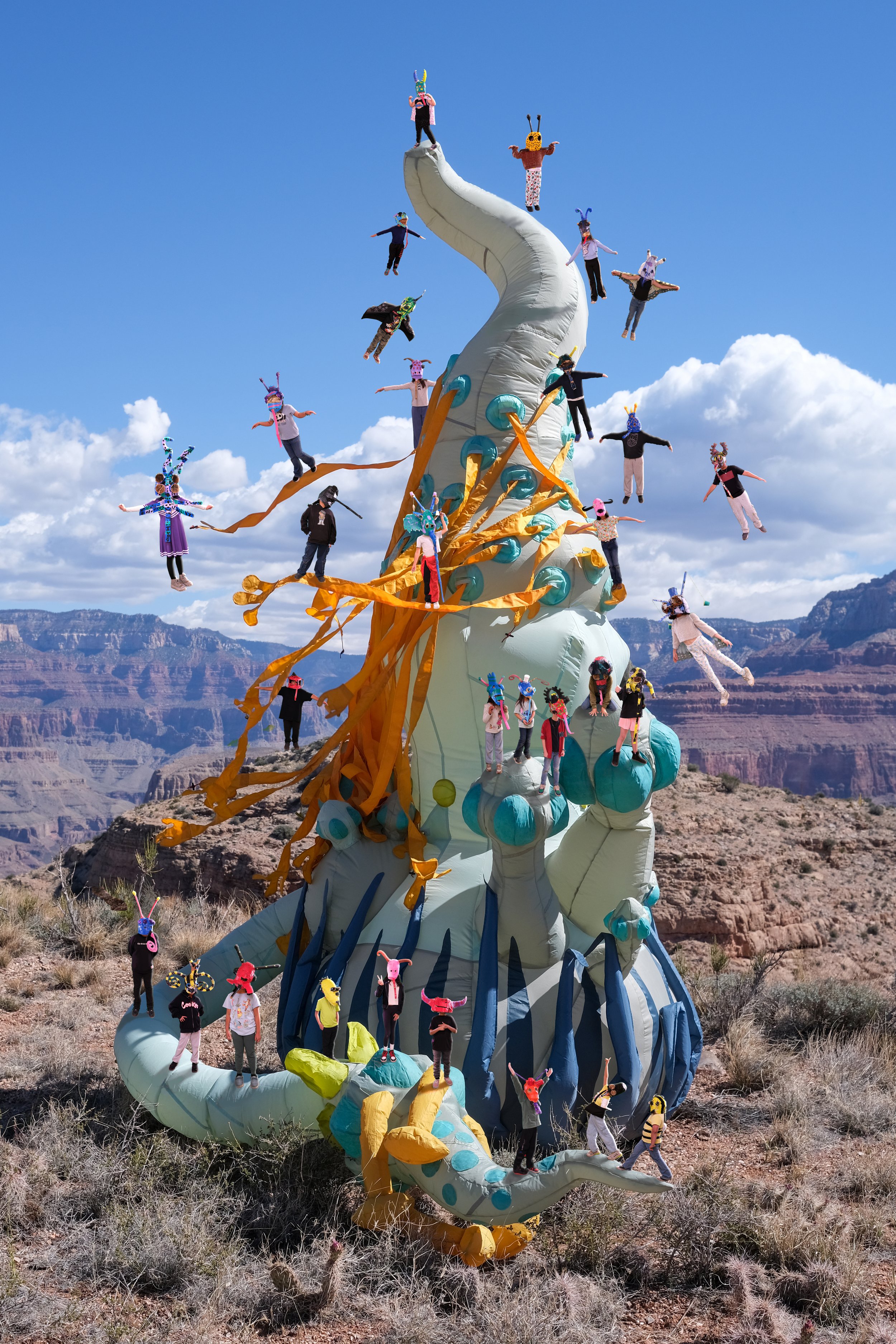
Created in collaboration with Devin Reilly during our Artists in Residency program at the Grand Canyon Conservancy in Spring 2026.
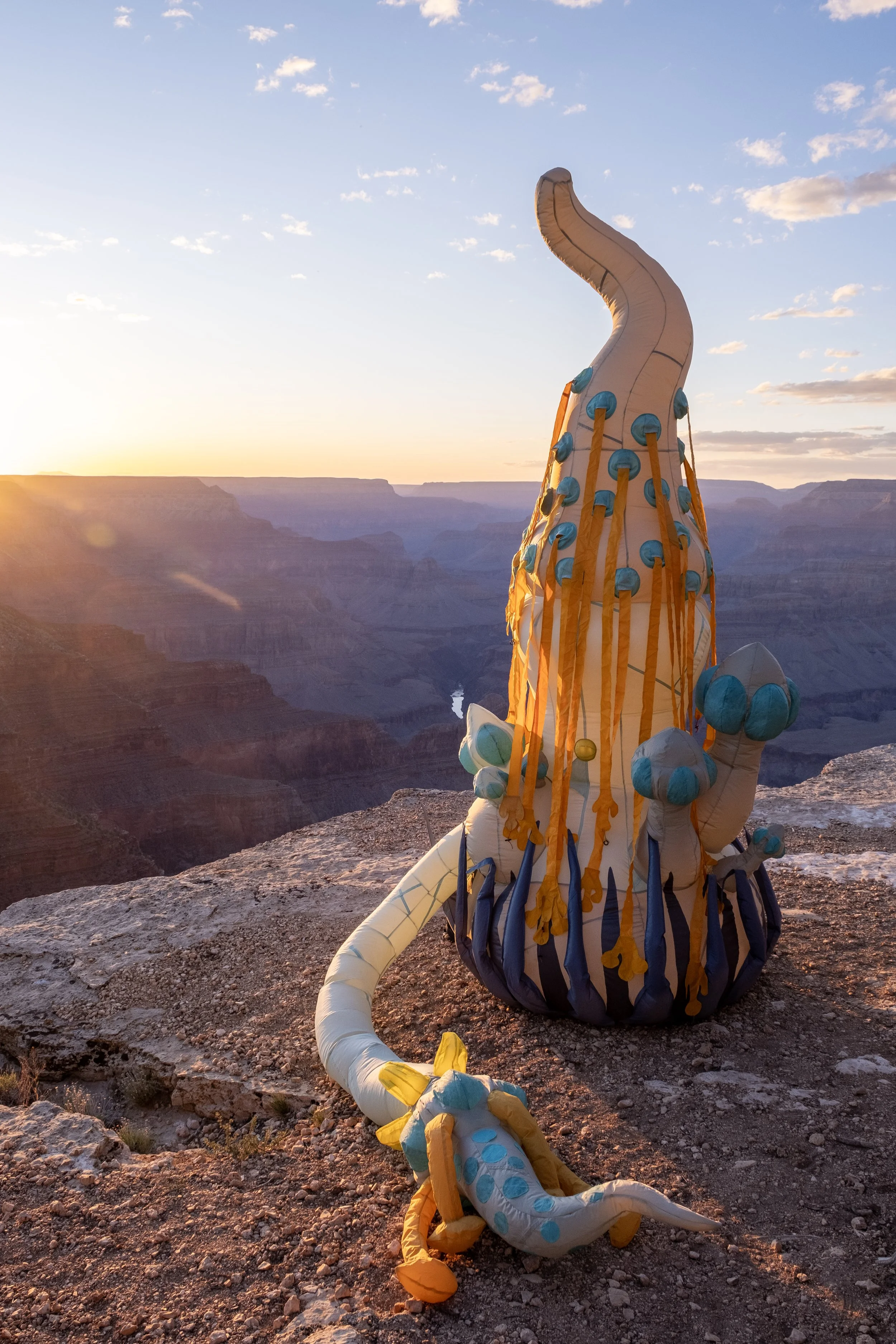
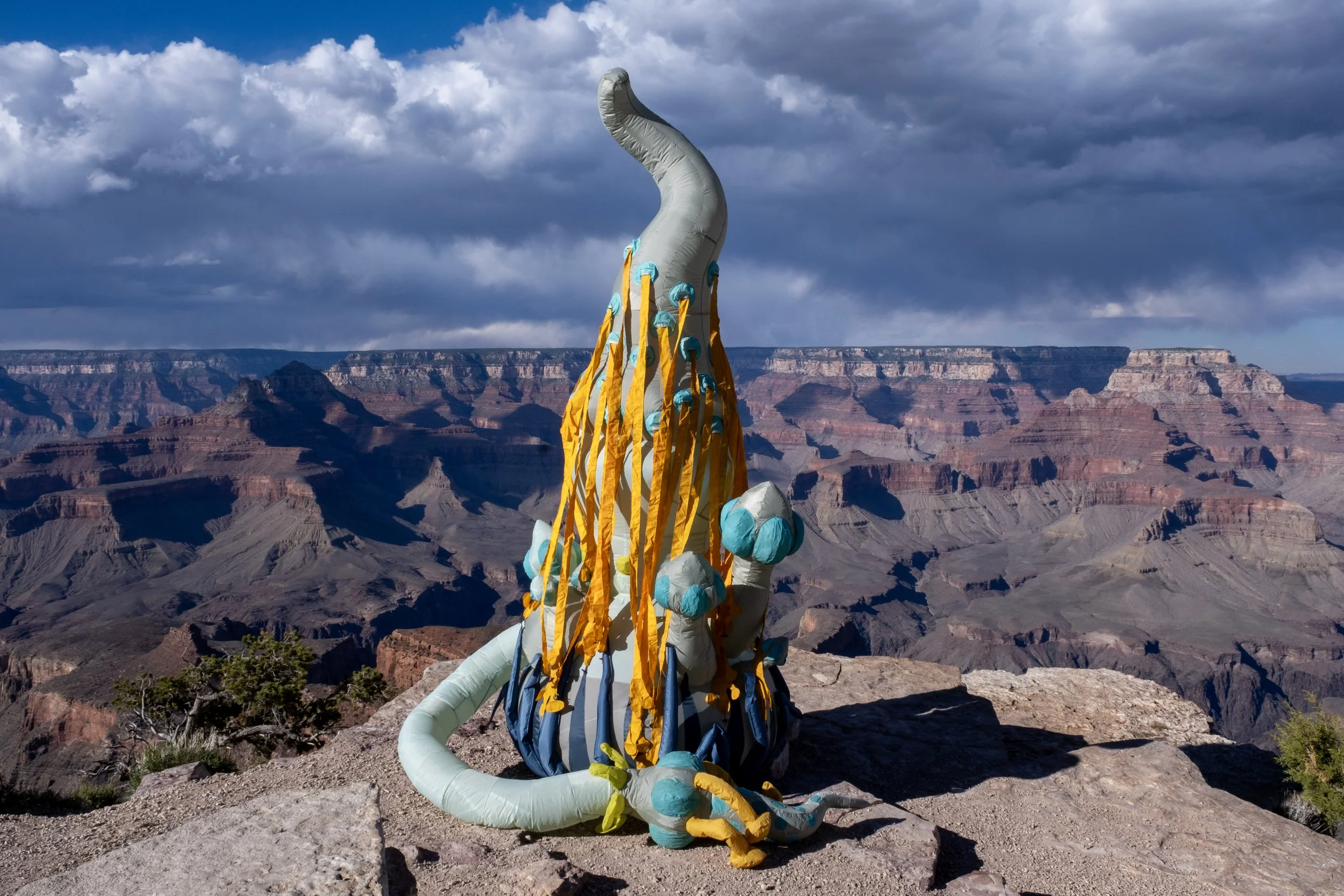
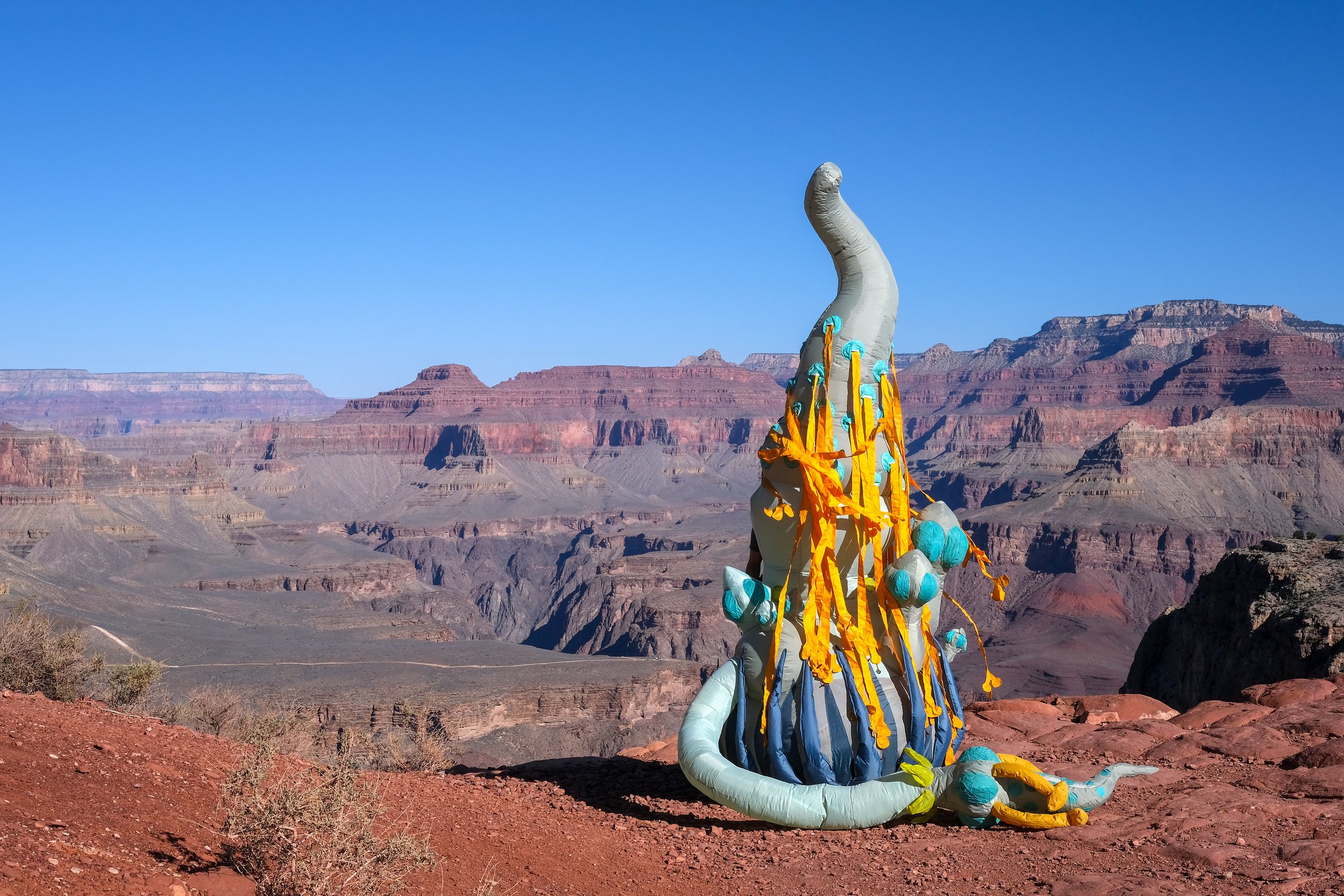
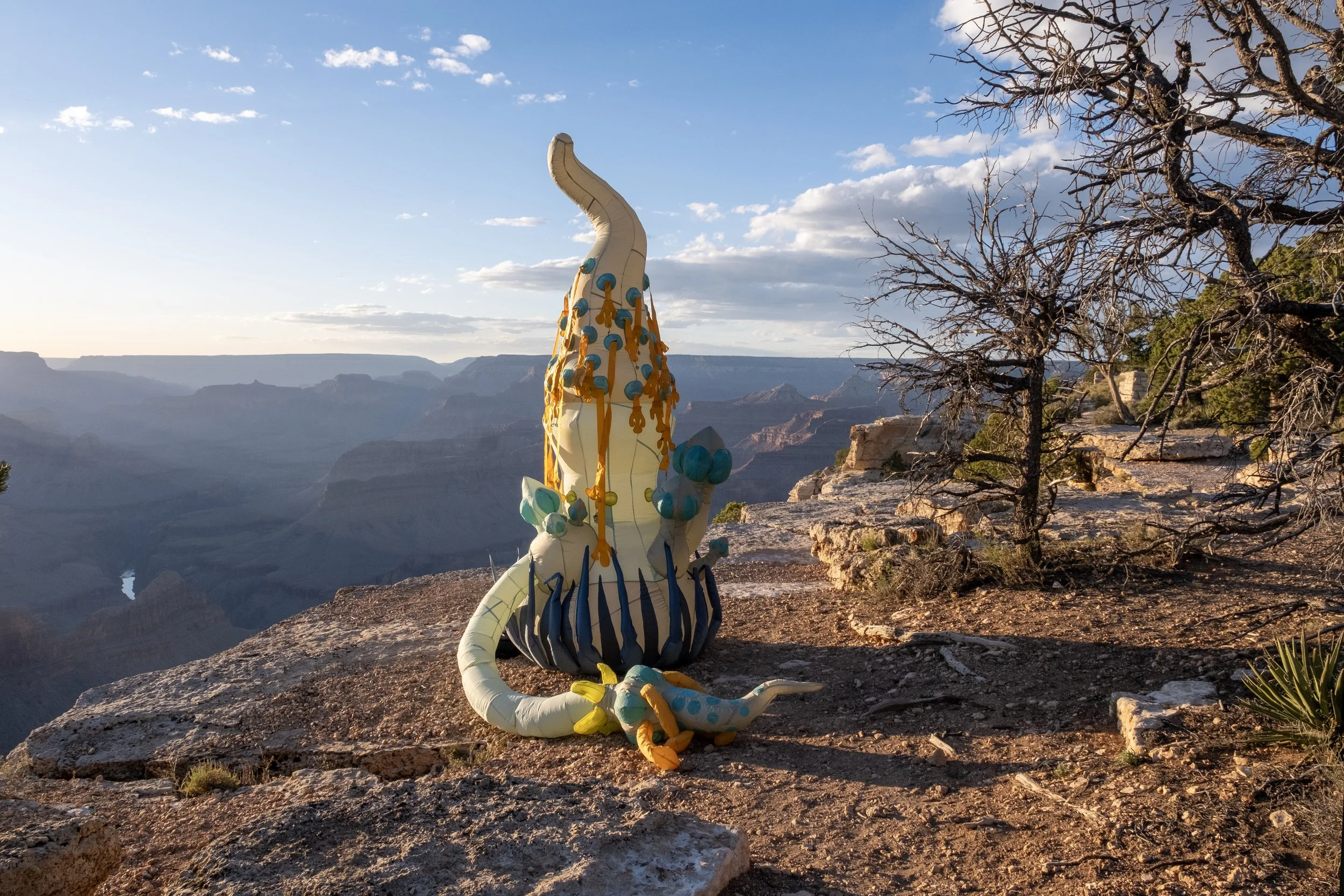
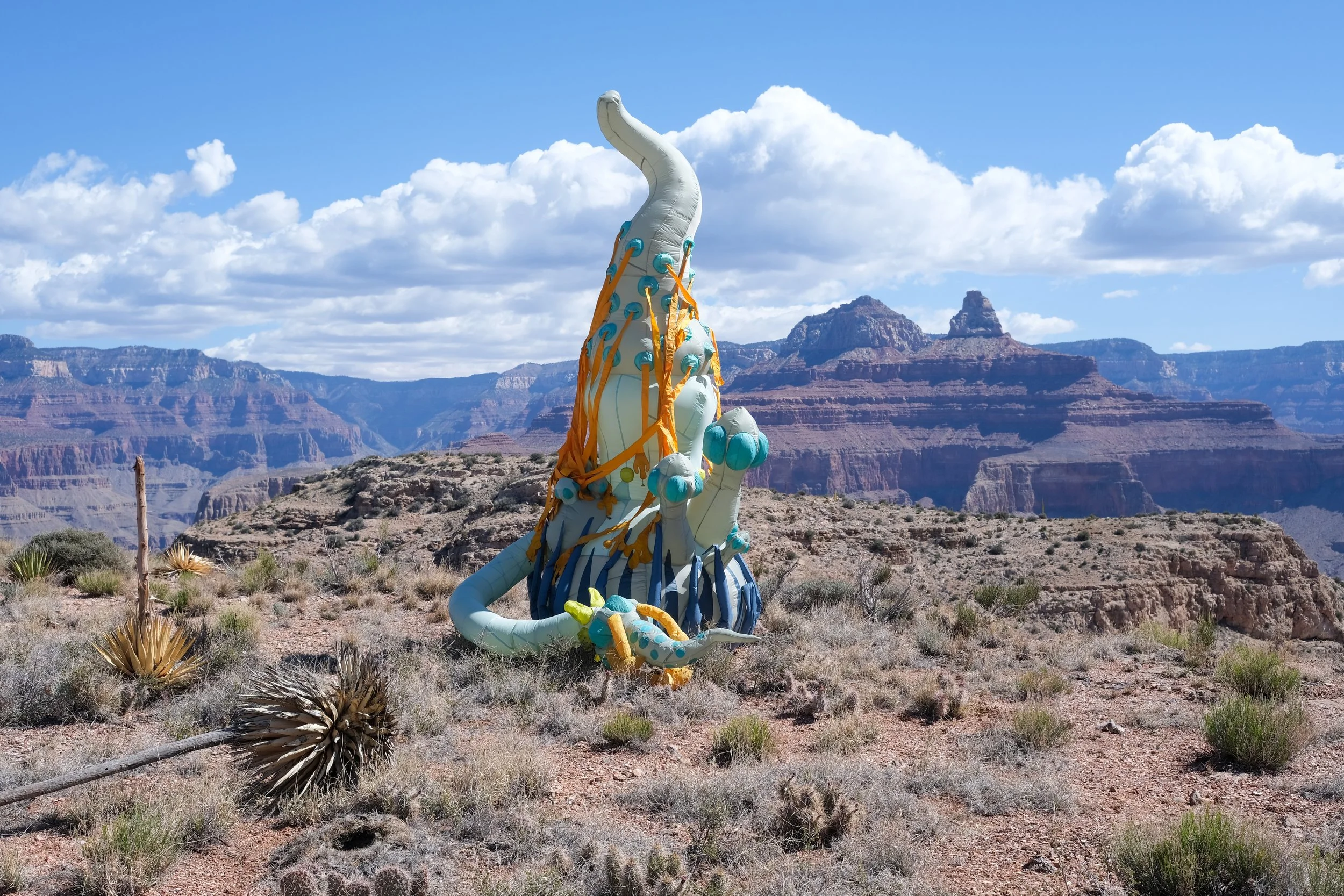
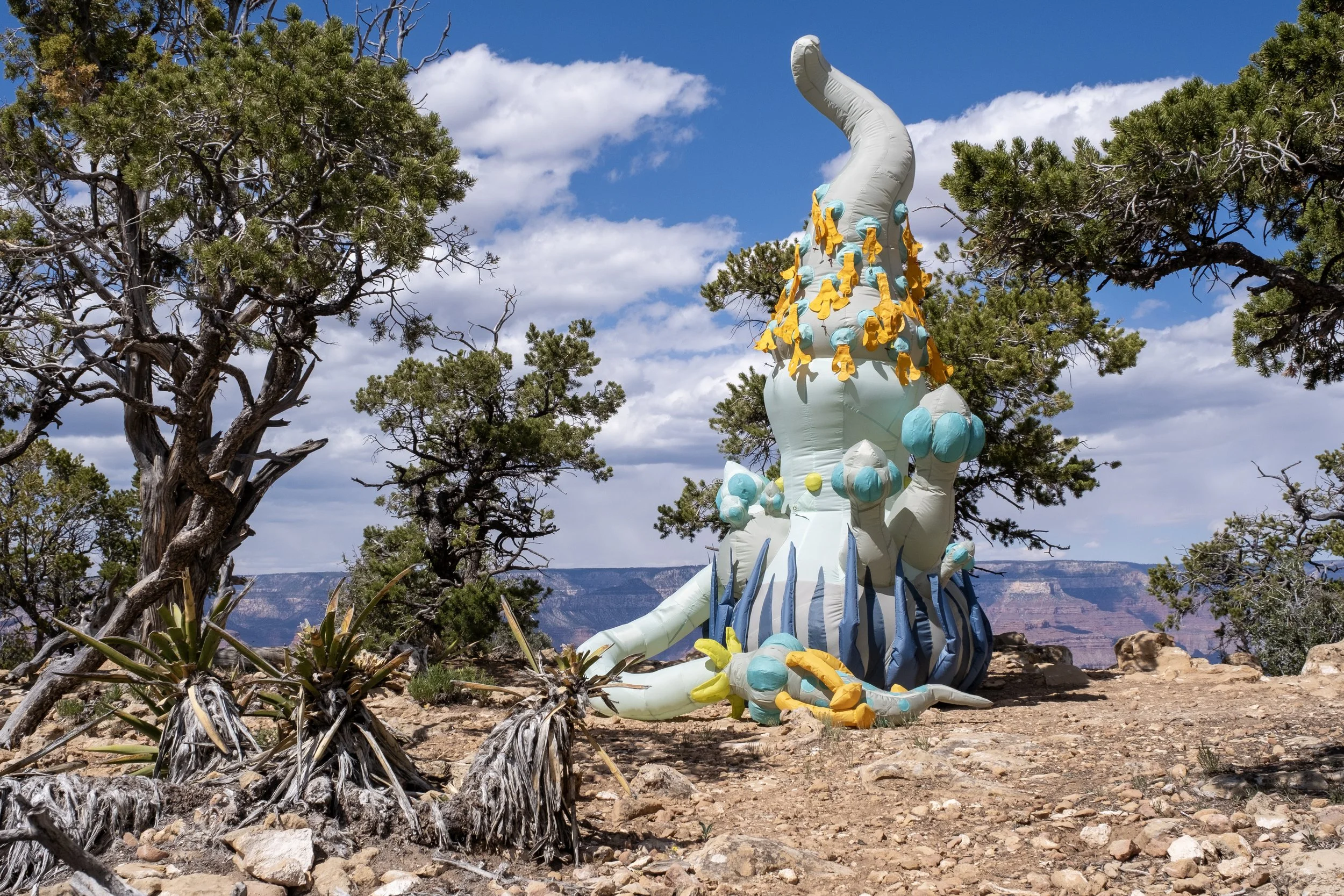
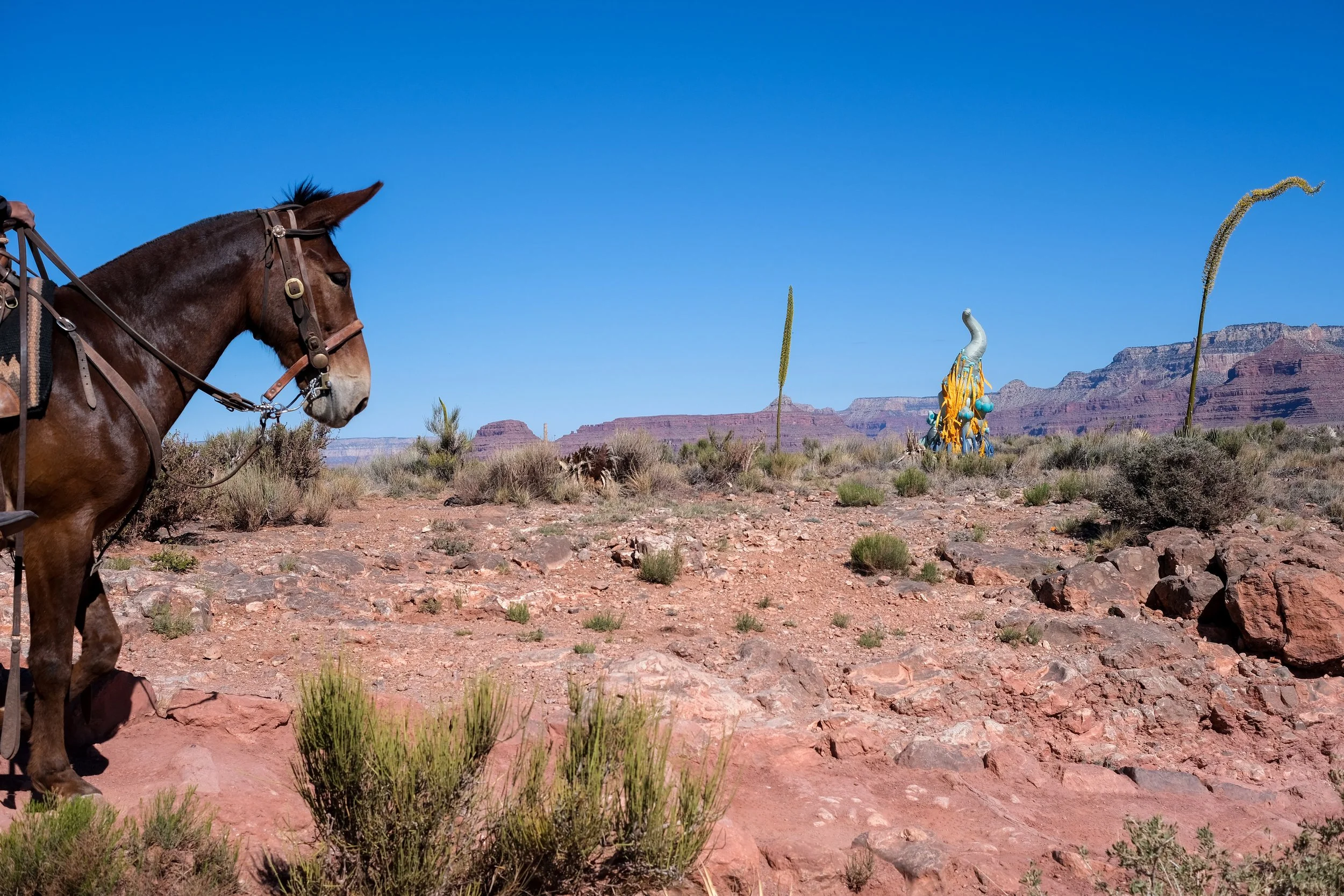
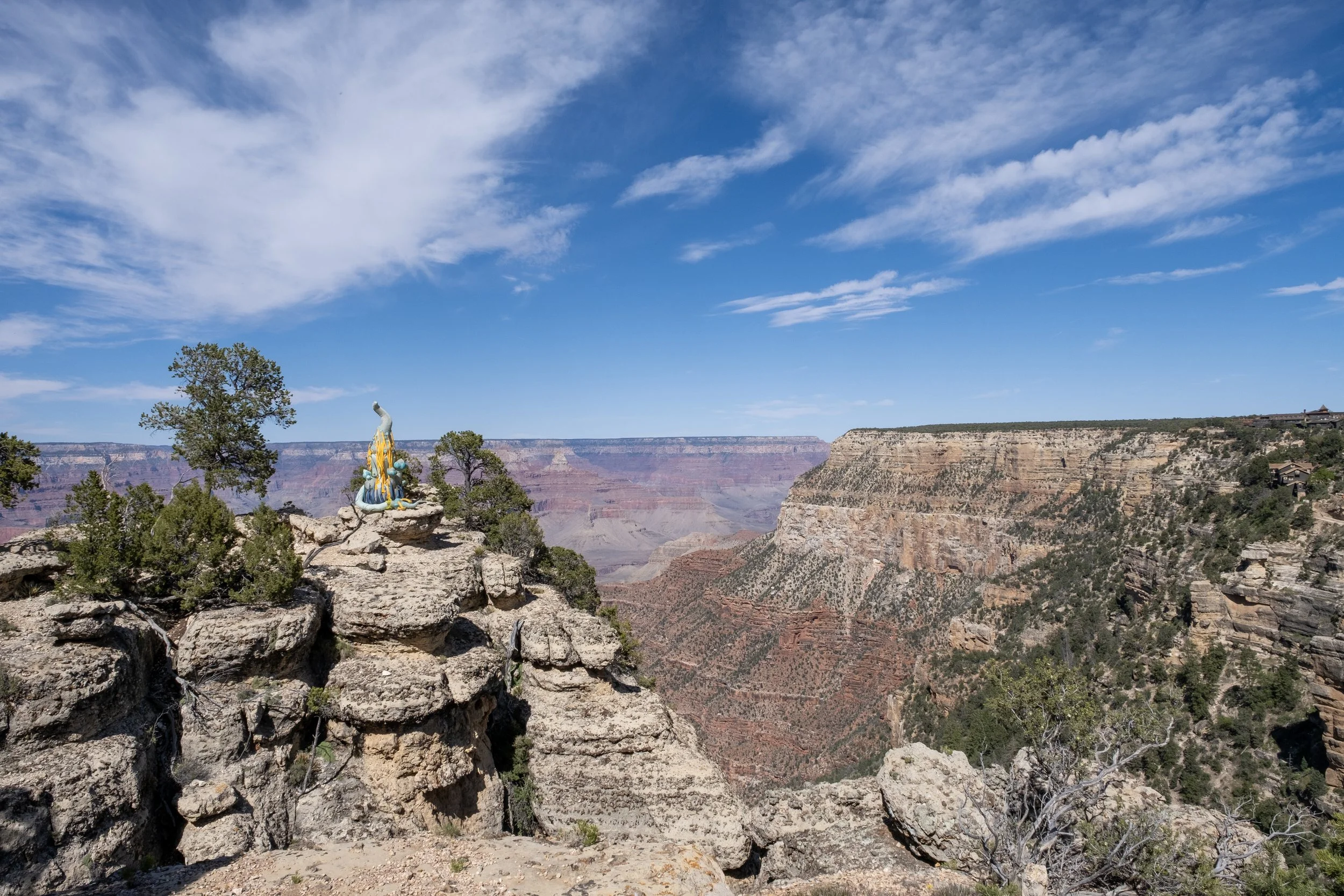
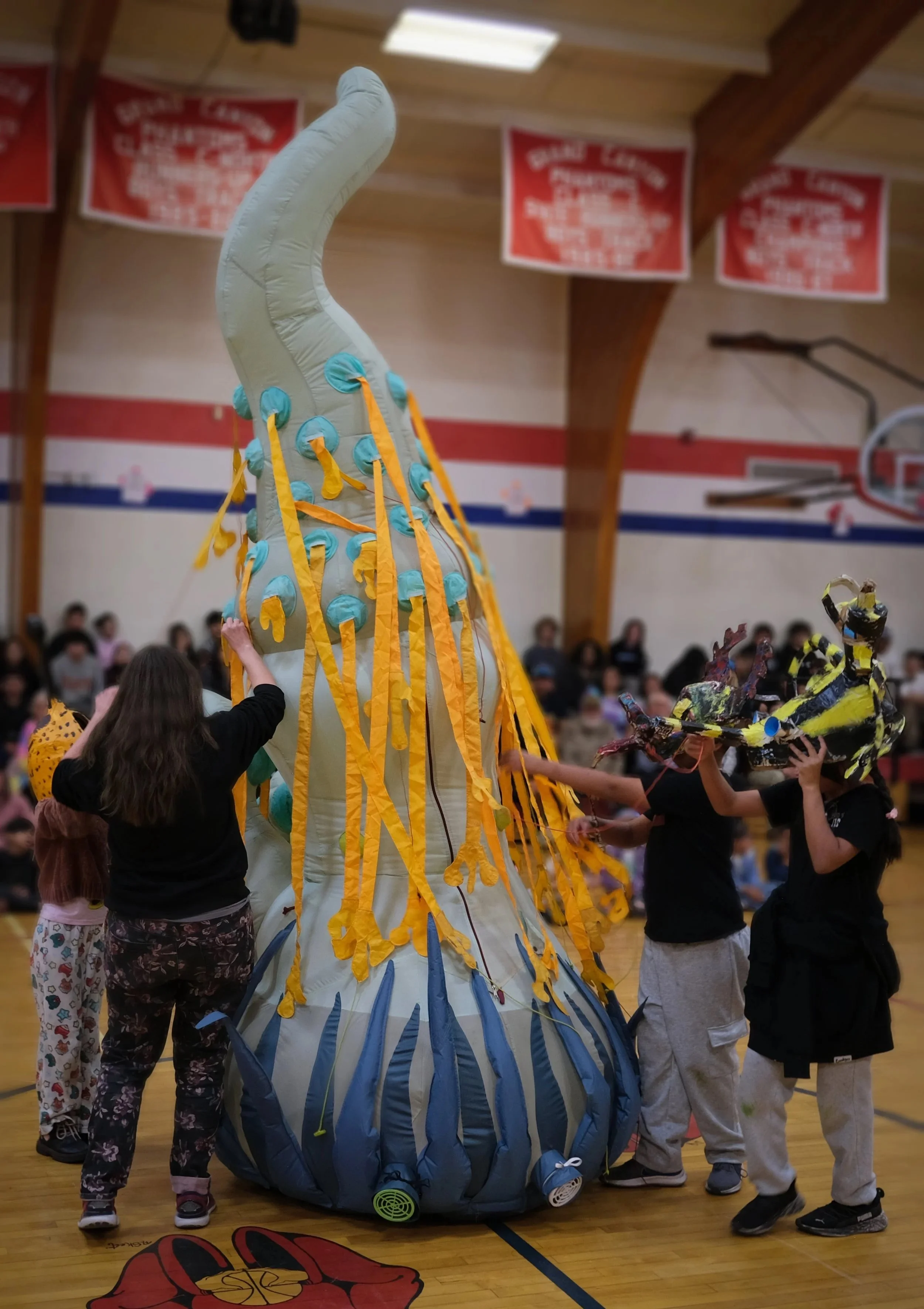
Our project explores the future of plant and insect relationships in the Grand Canyon. As our climate changes plants and insects are at risk, and because they rely on each other for survival that risk is multiplied. Plants in the Grand Canyon live in a harsh environment and have adaptations to drought, fire, and flooding. Can they continue to adapt as our climate changes? This project imagines the extreme ways that plants and their pollinators must change to survive. We created an inflatable sculpture of a future agave and we worked with the 3rd and 4th graders at the Grand Canyon School to design future pollinators.
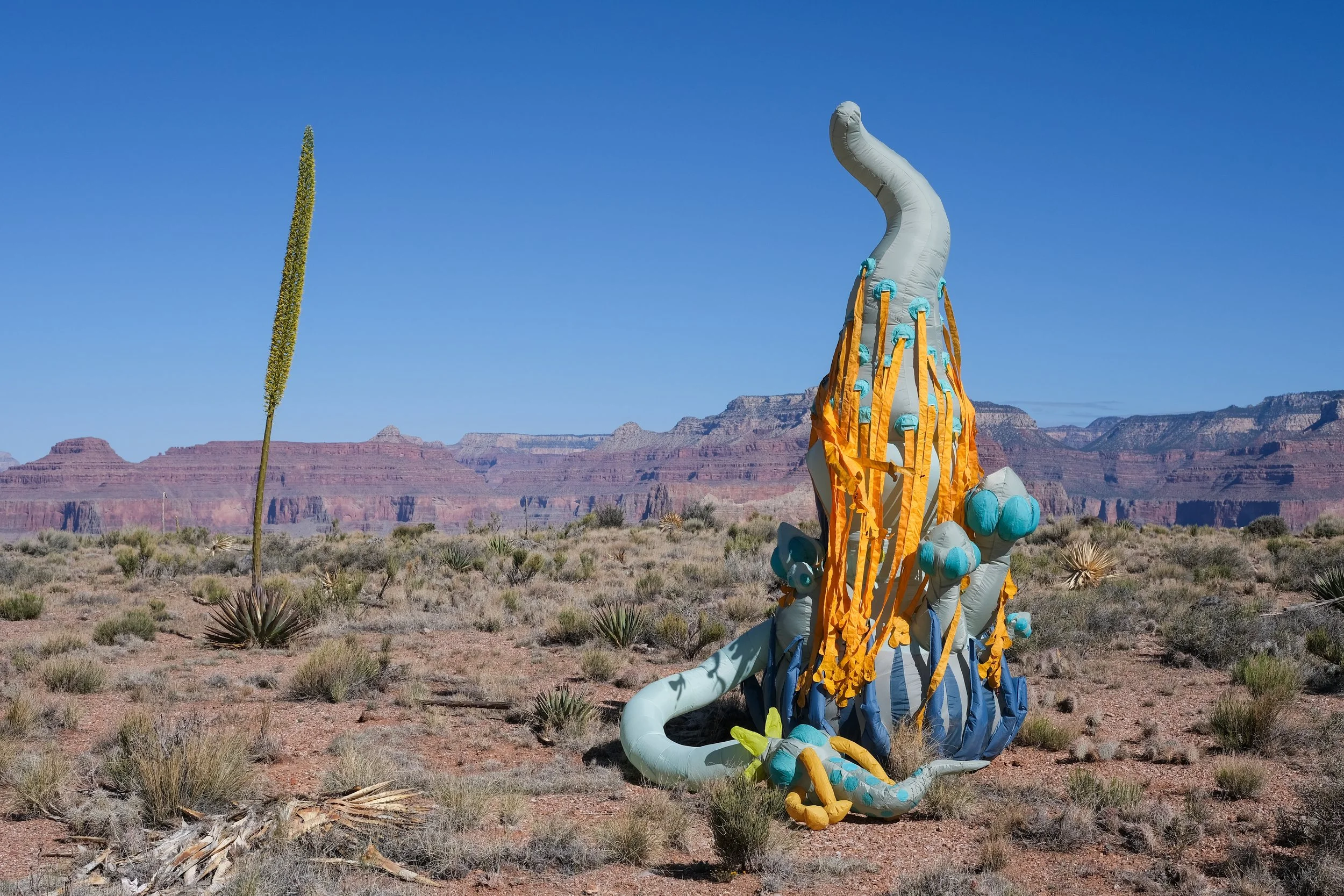
Our future plant is inspired by the amazing blooms of the Agave found within the Grand Canyon.
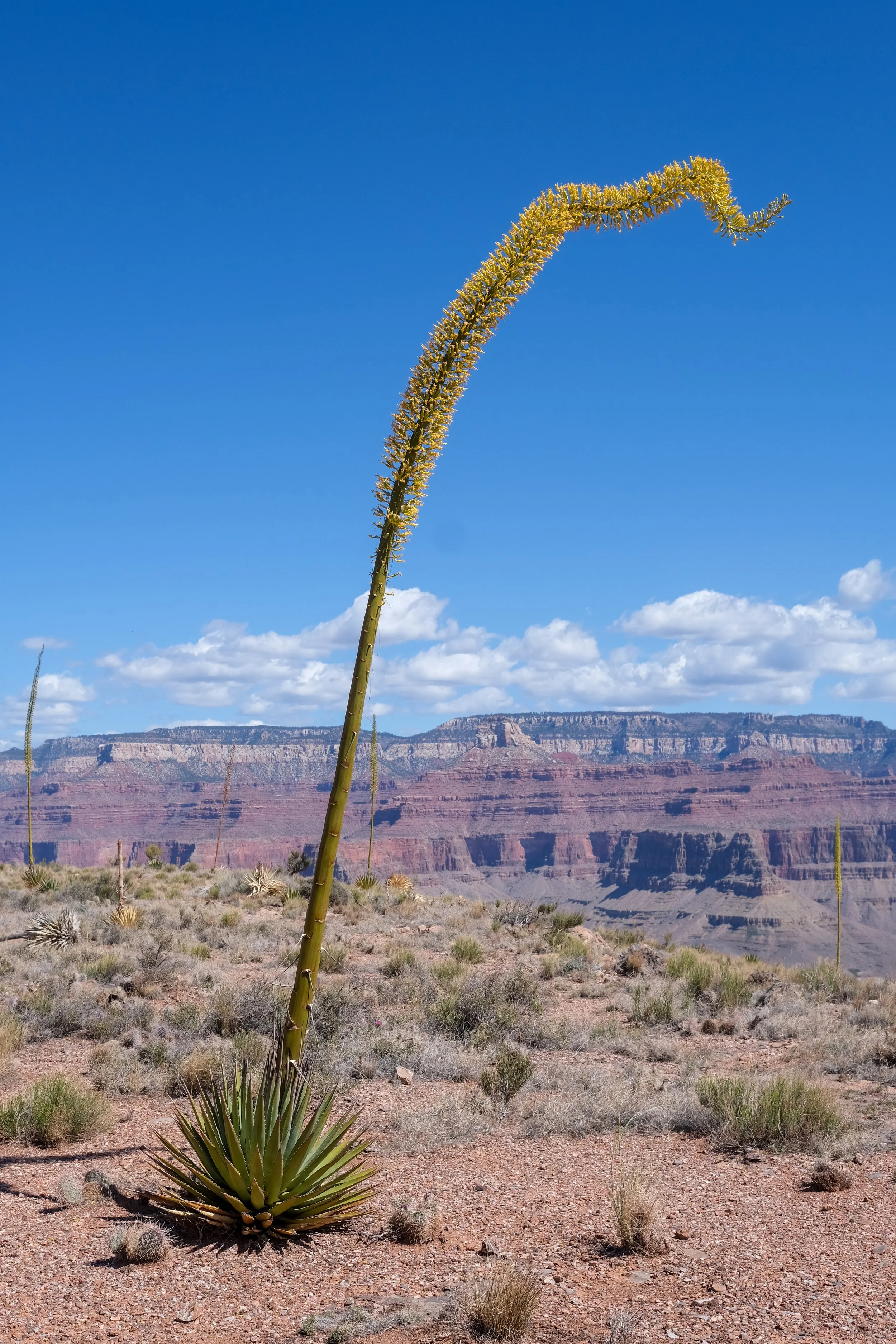
Blooming Utah Kaibab Agave at Skeleton Point in the Grand Canyon.
The Agave only blooms once. At the end of it’s life it sends up a giant slender stock with many small yellow blooms. This giant stock attracts many pollinators; humming birds, bats, carpenter bees, and moths.
The 3rd and 4th graders at the Grand Canyon School designed future pollinators. Together we brainstormed different adaptations the pollinators would need to survive in the future.
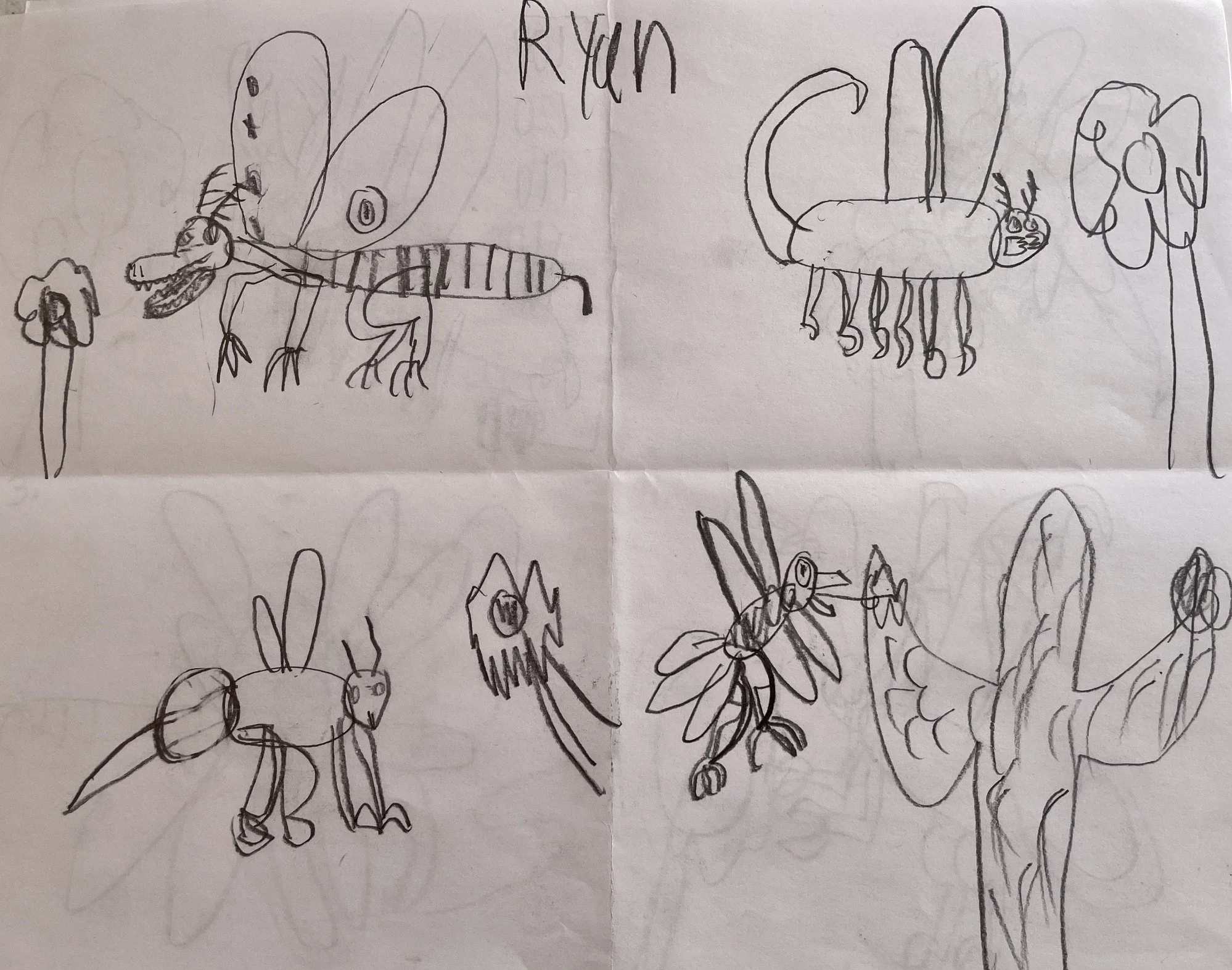
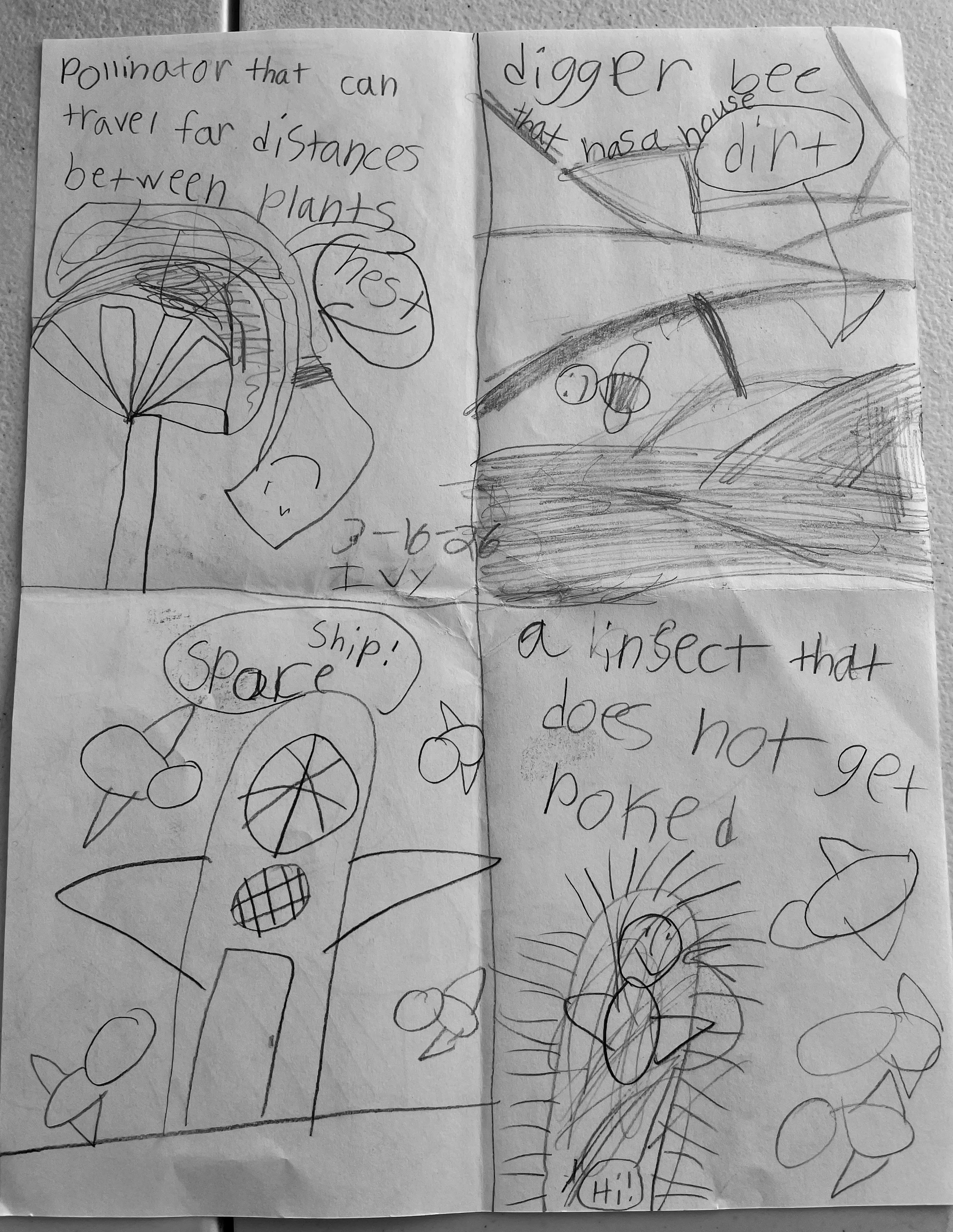
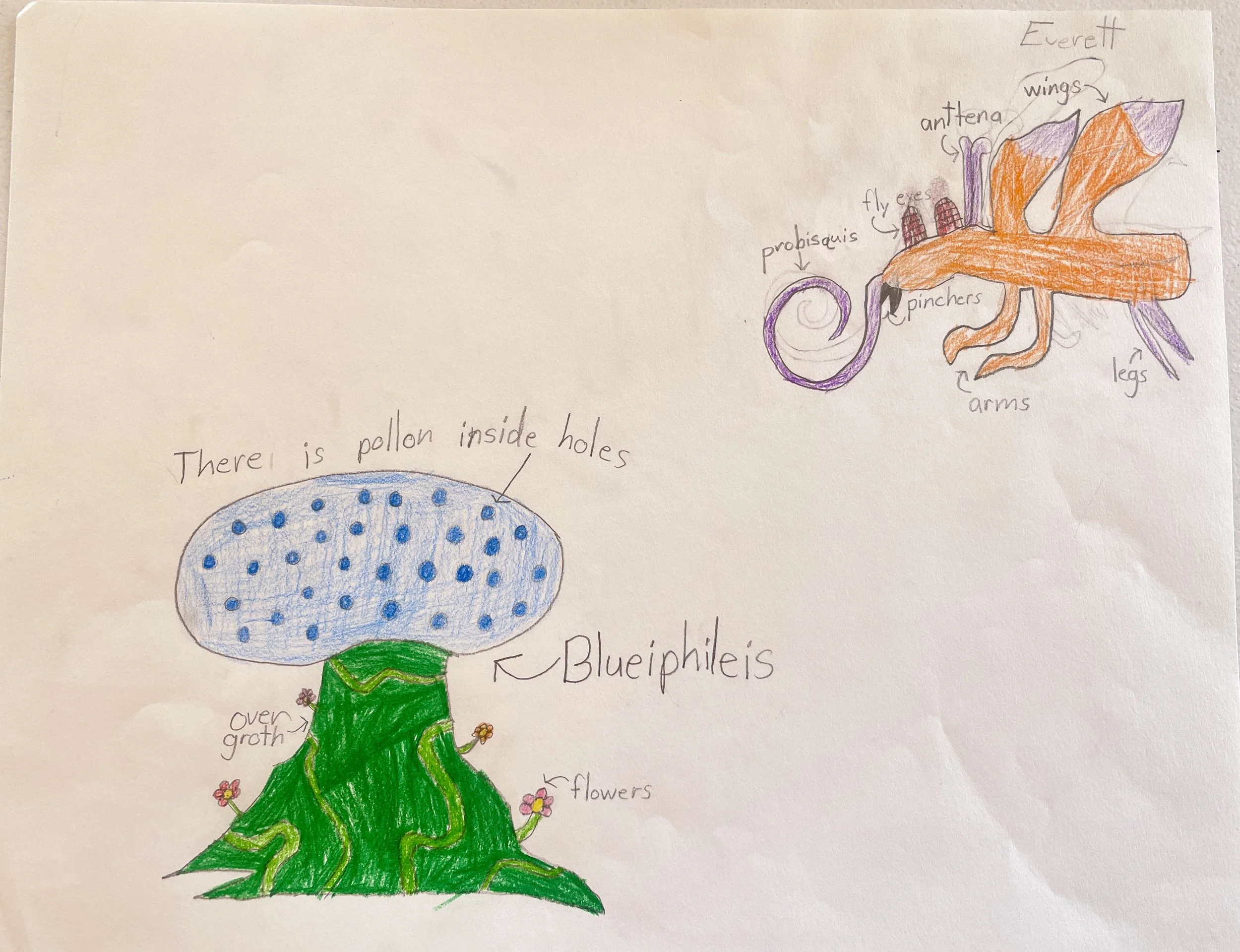
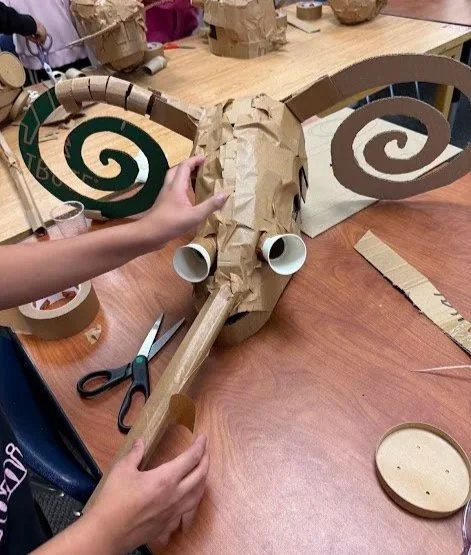
They created armatures from recycled cardboard and paper tape, then paper masheed and painted their heads. During their design process we discussed adaptations that pollinators will need as out climate changes.
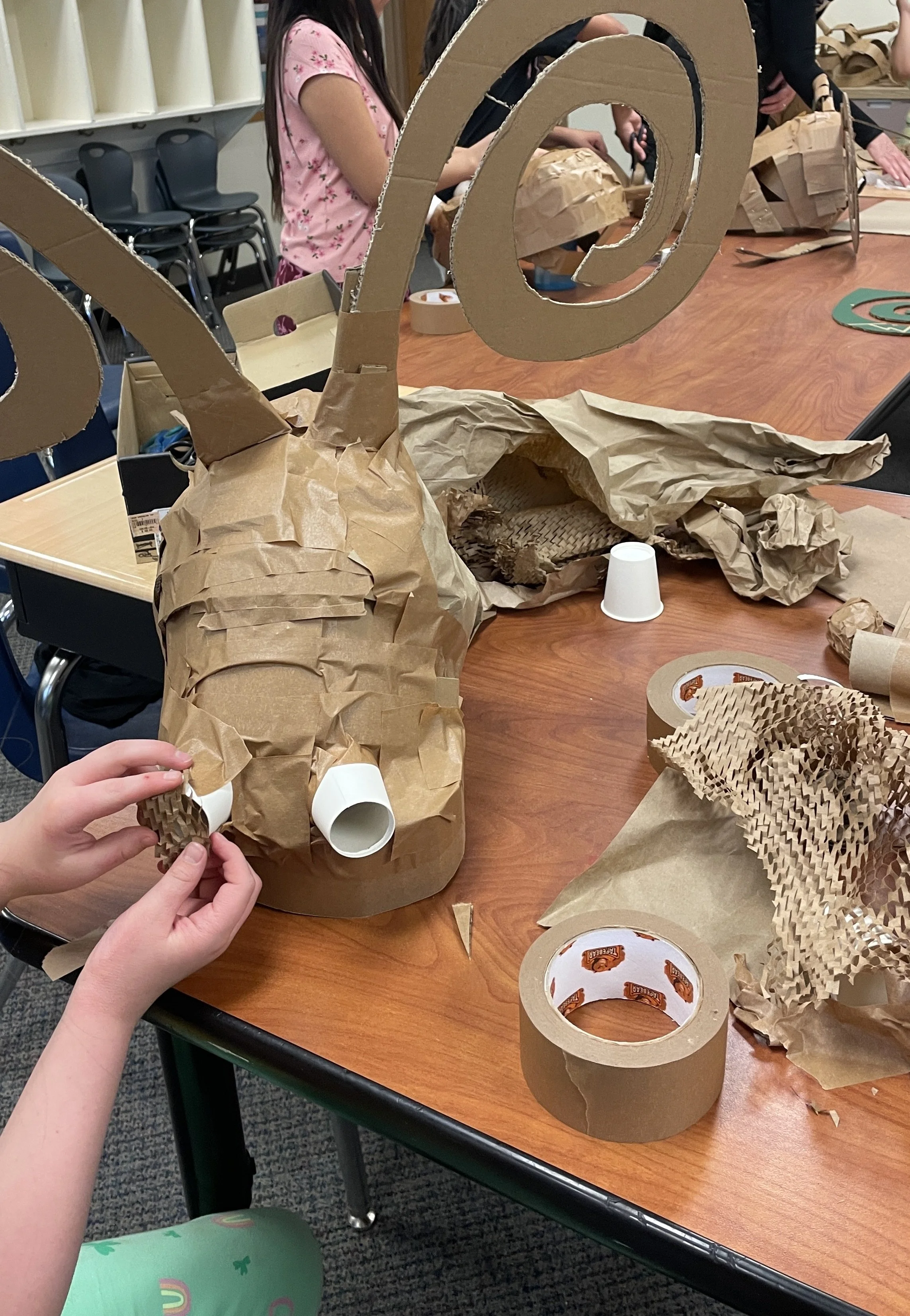
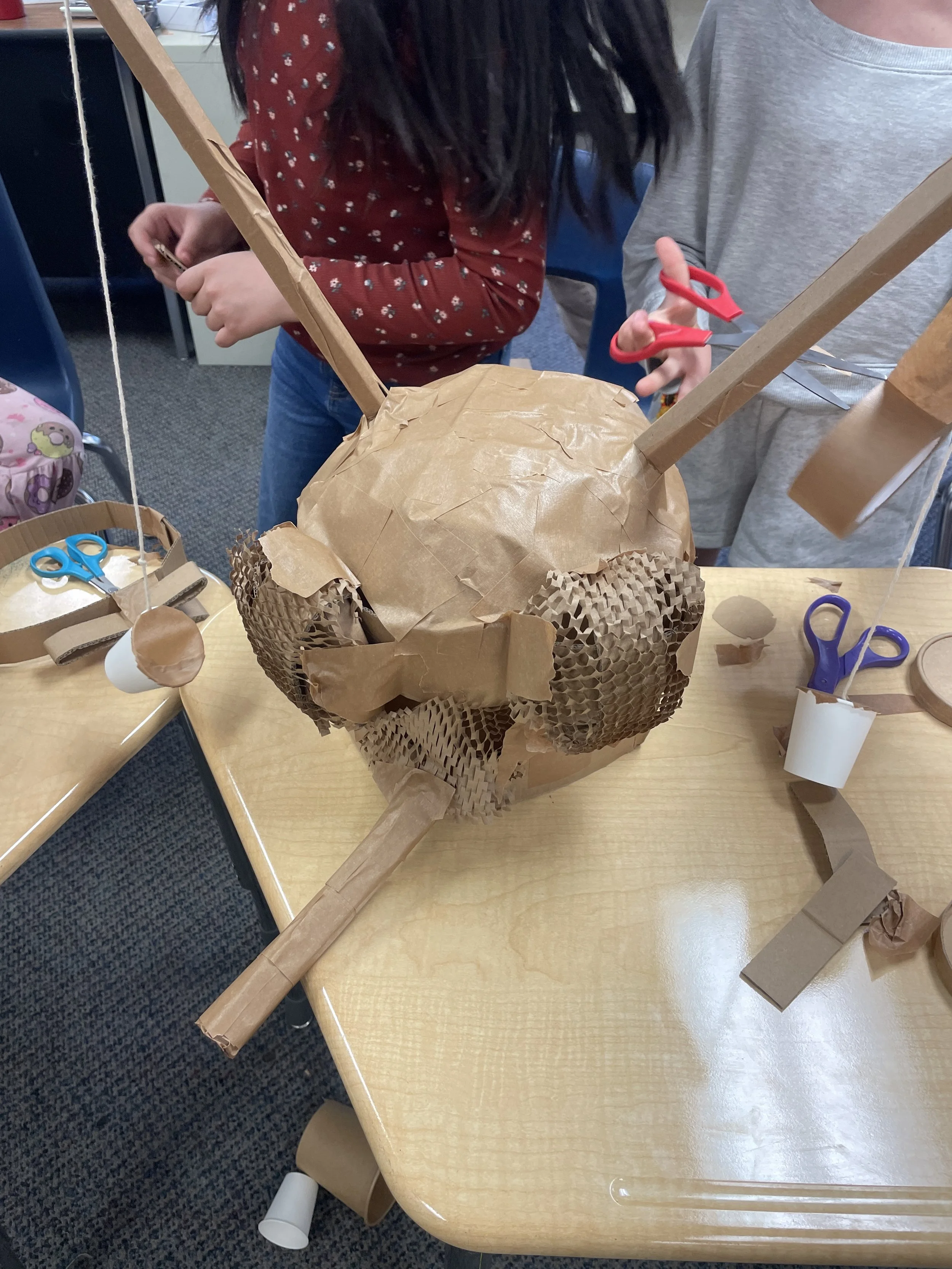
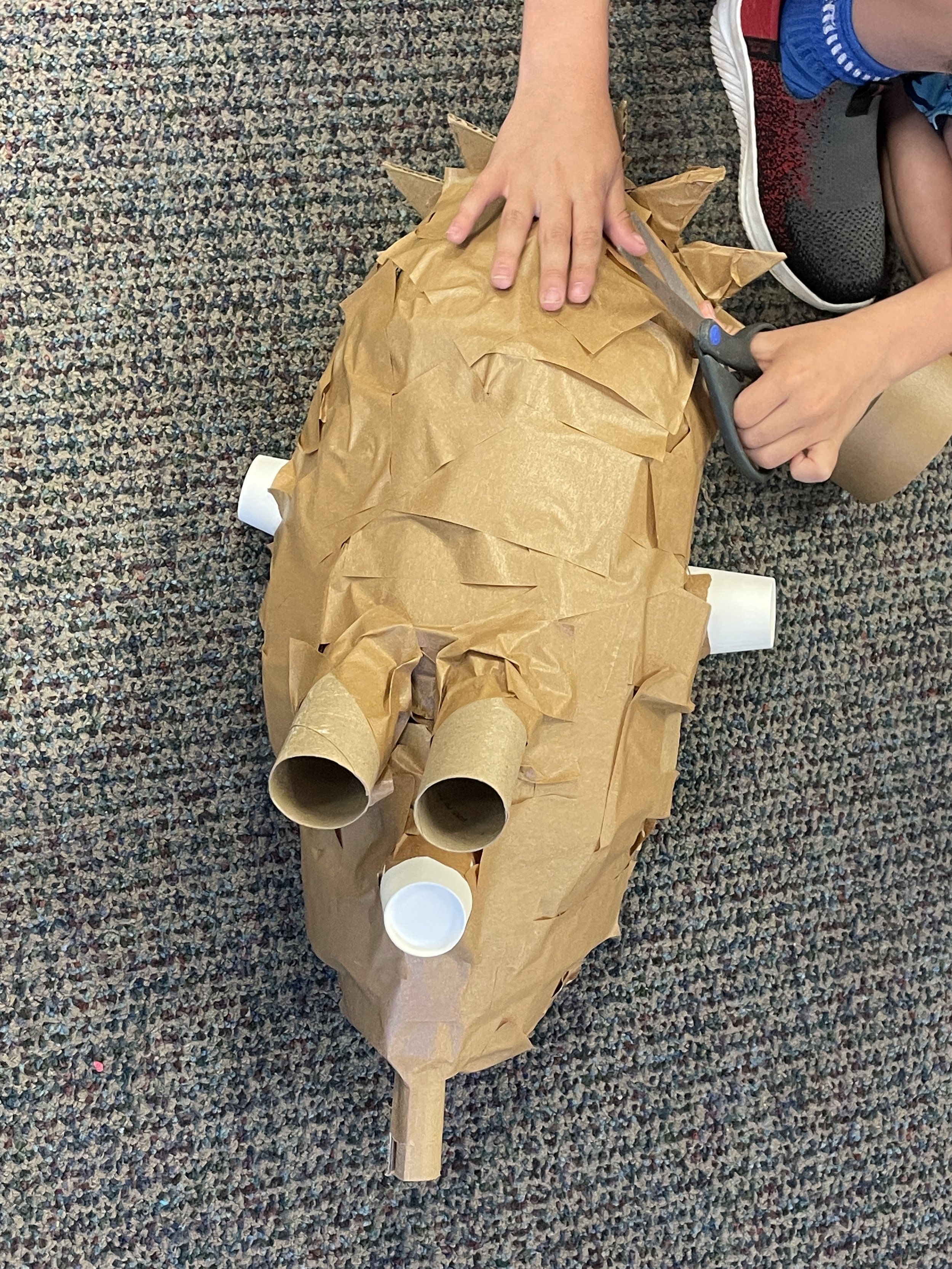
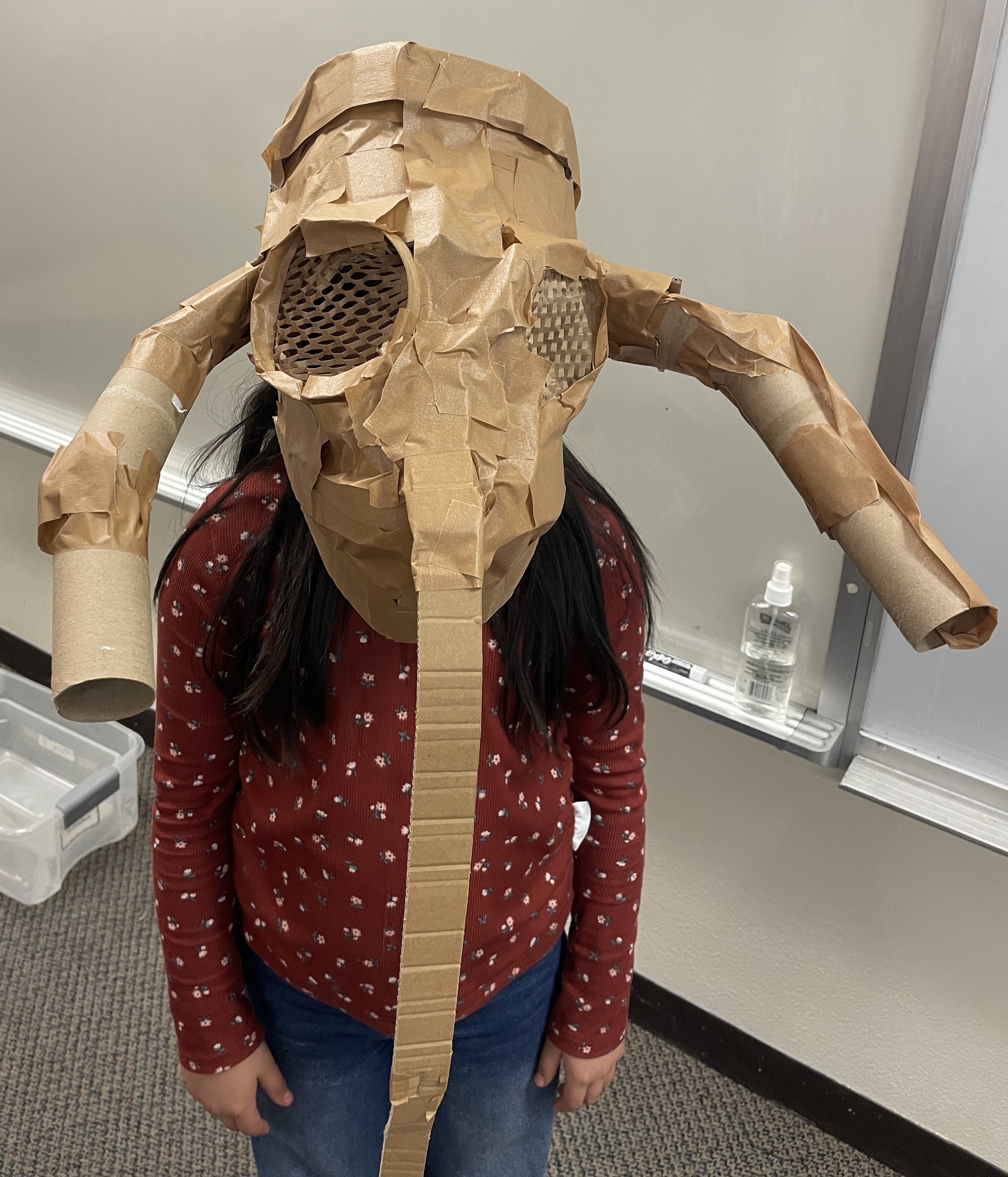
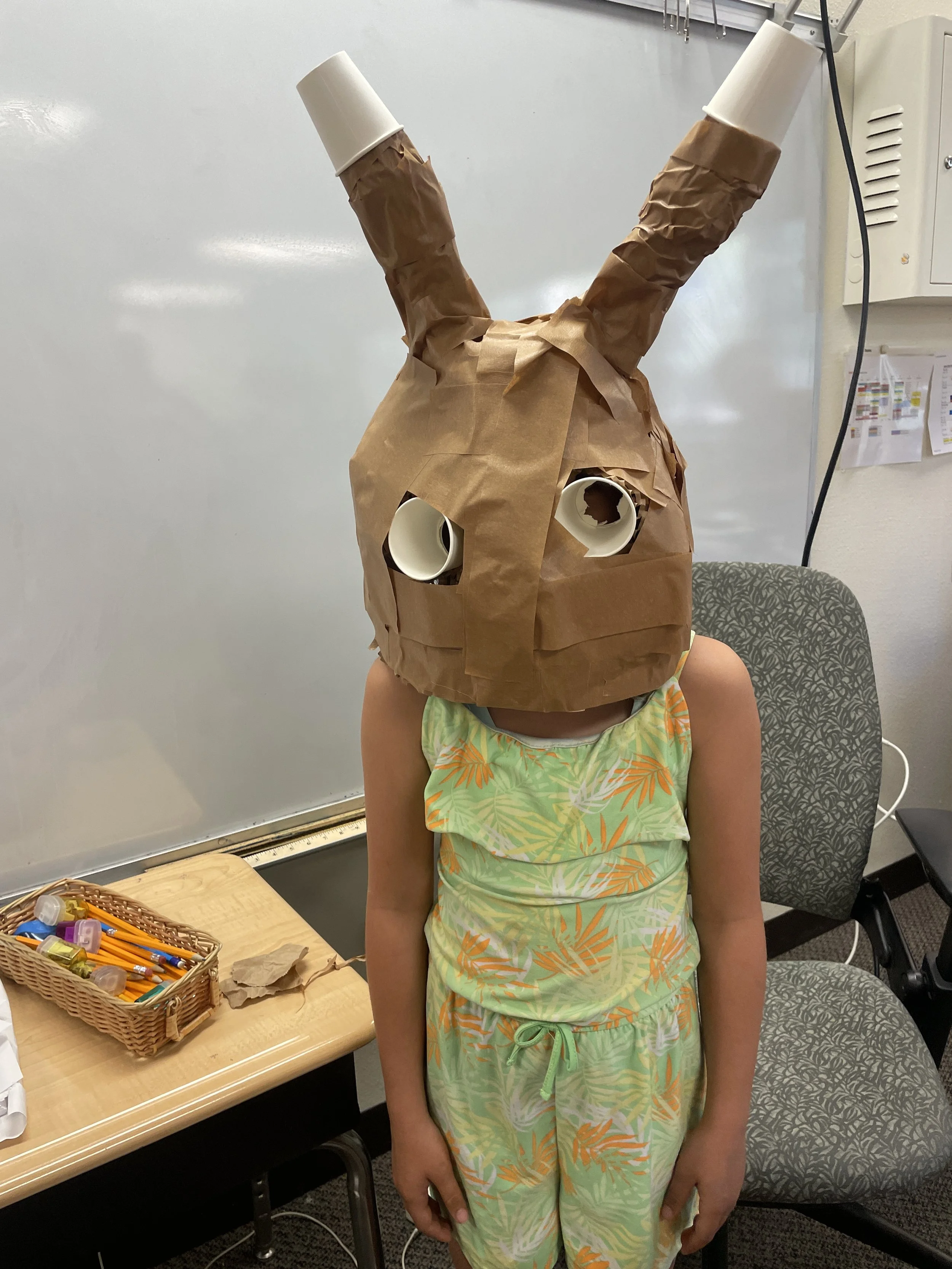
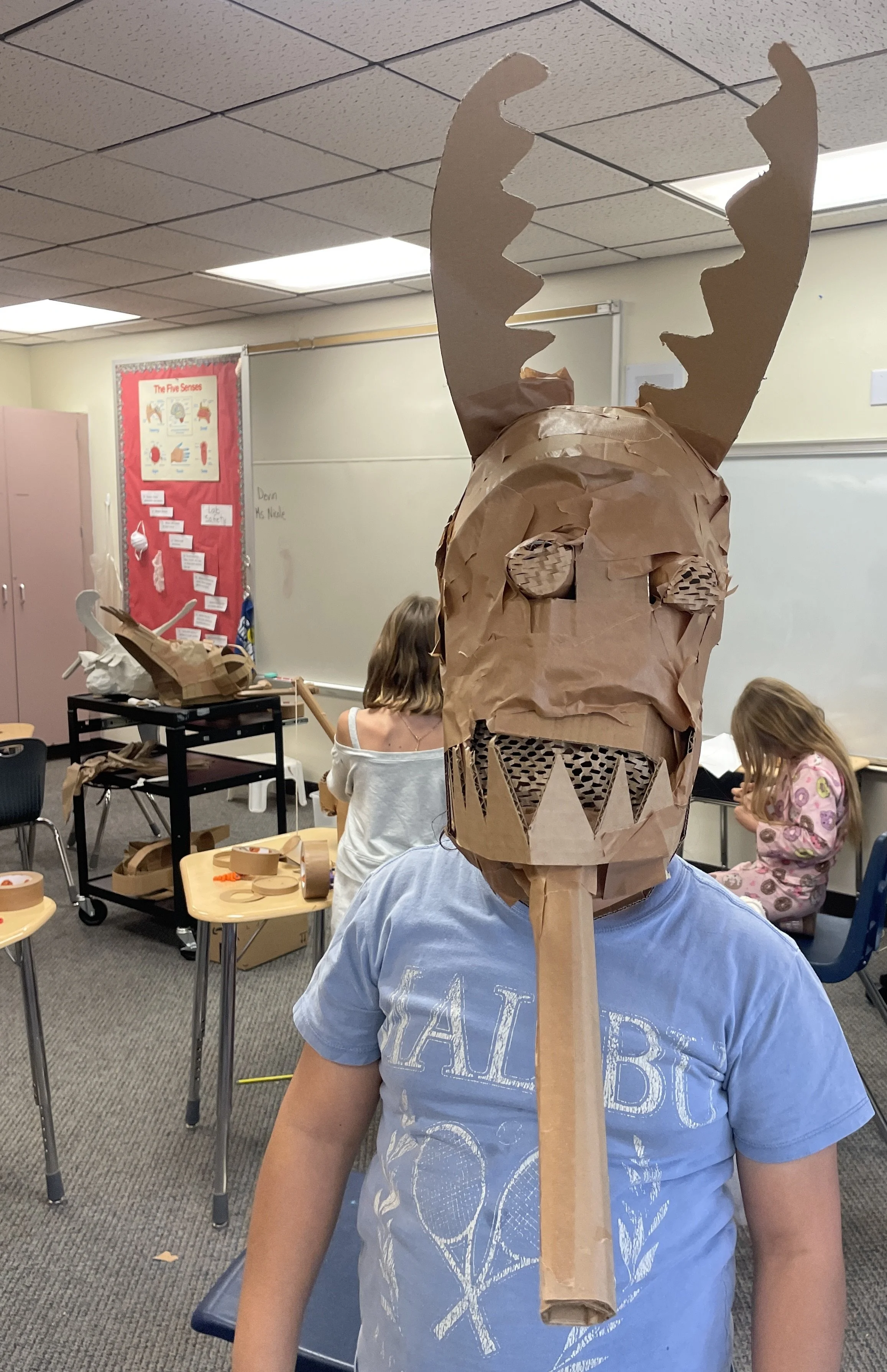
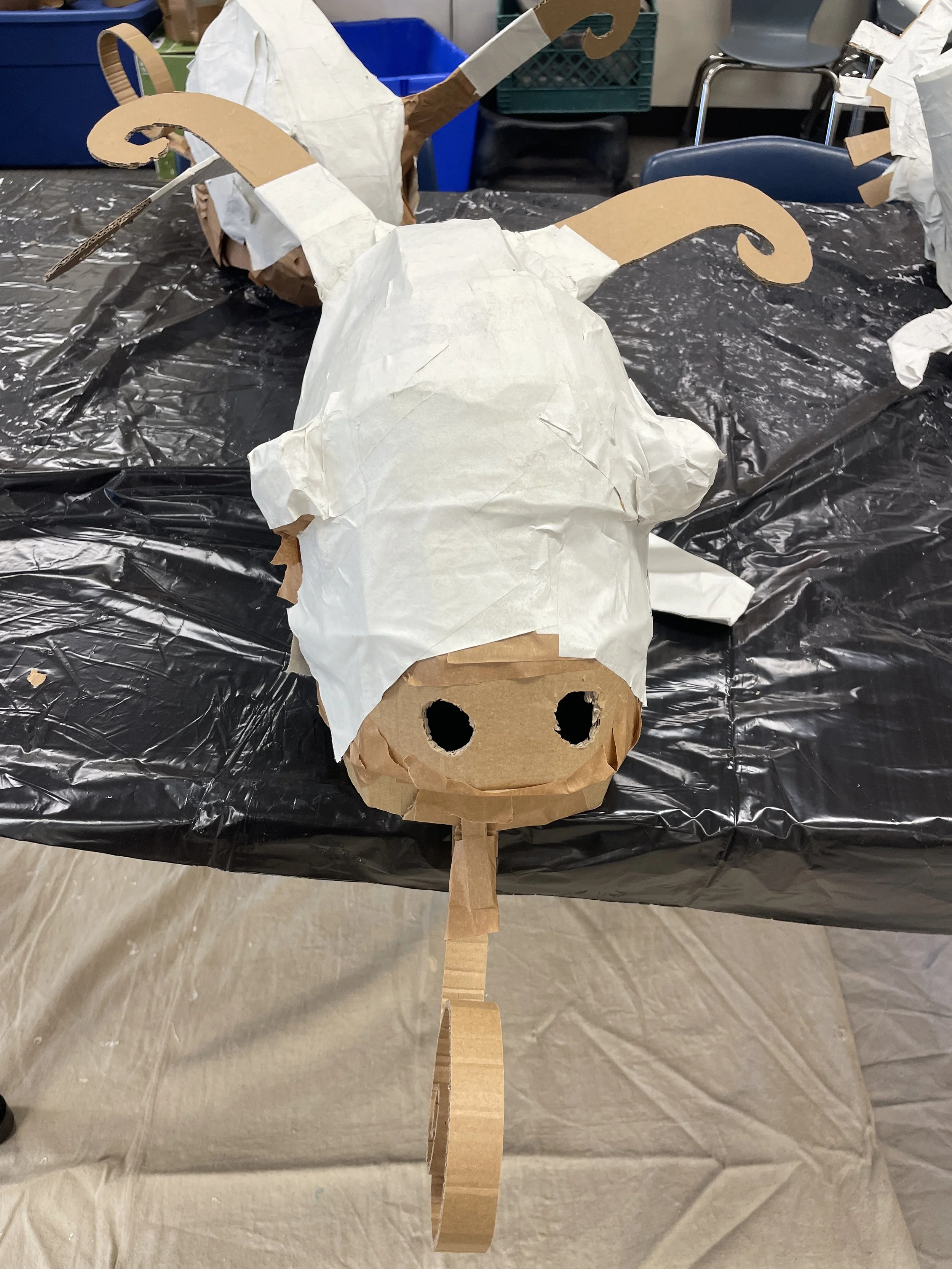
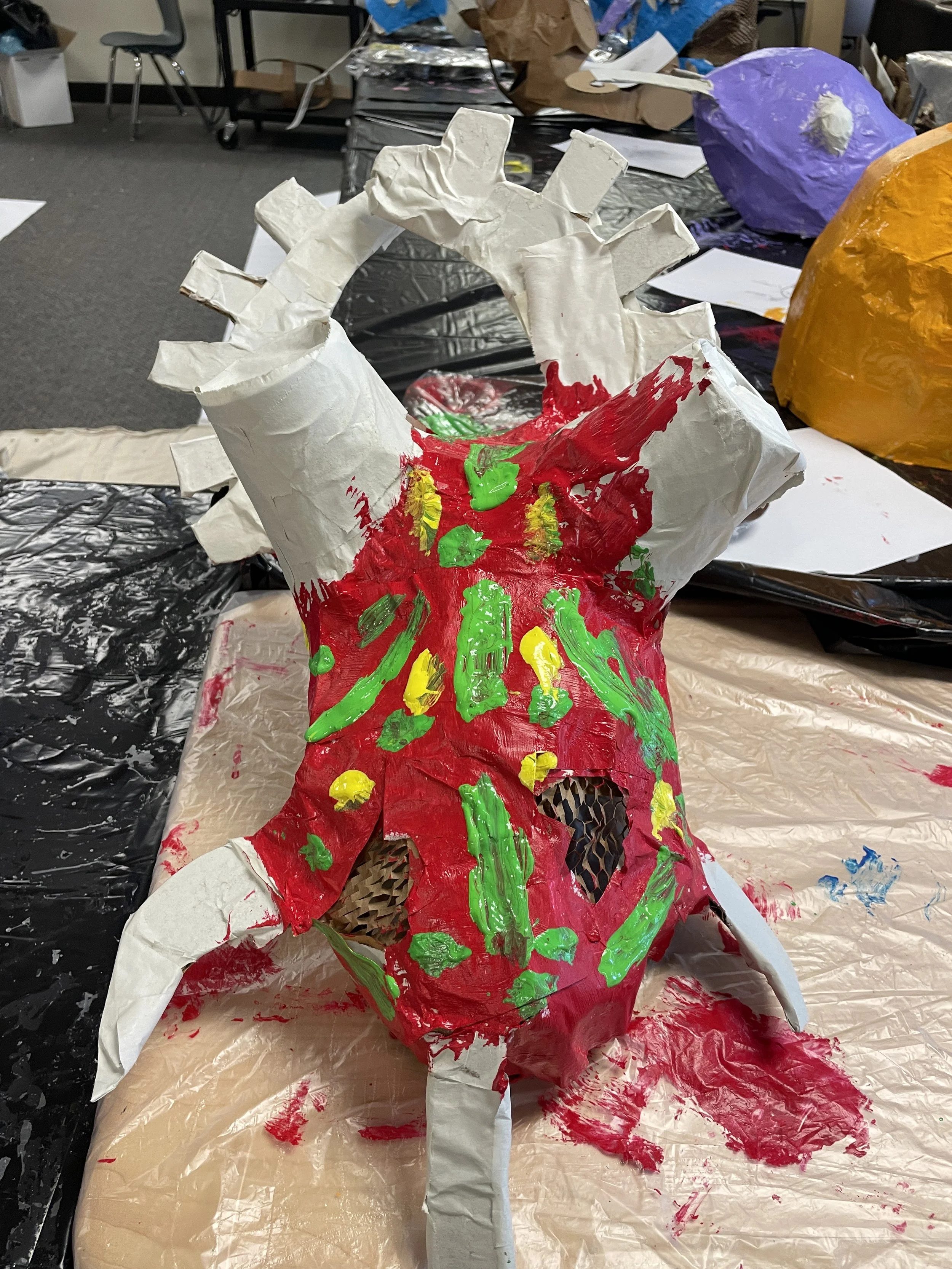
A selection of Future Pollinators
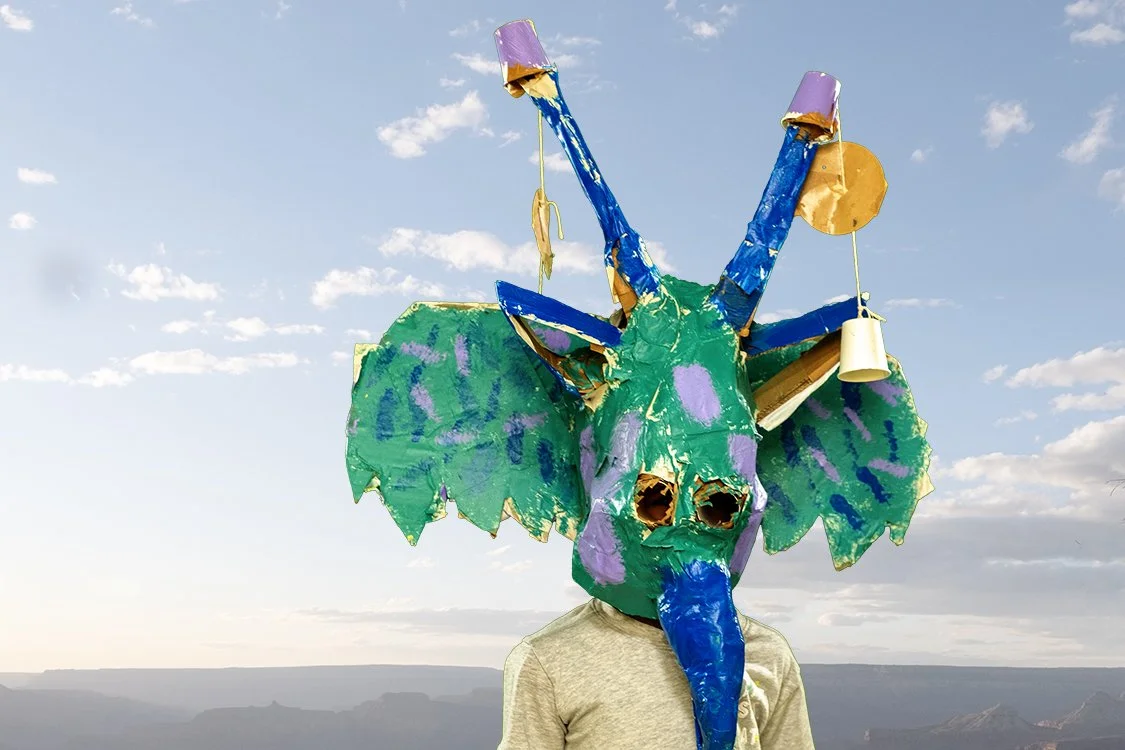
Wild Thing
I hate bugs, but I love bats and butterflies. So I built a bat bug butterfly. My Wild Thing lives in Grand Canyon, and its range extends to Nevada. It's as big as a car. It has a long, long, long proboscis, fly eyes, and ears and wings of a bat. The antennae plates catch pollen. It helps all the plants grow really big so that the Grand Canyon has lots of water and looks a little healthier.
I've lived only in National Parks, including Glacier, Yellowstone, Crater Lake, and Grand Canyon. Wild Thing is blue, green, and purple, so it can blend in with the Colorado River while it's pollinating.
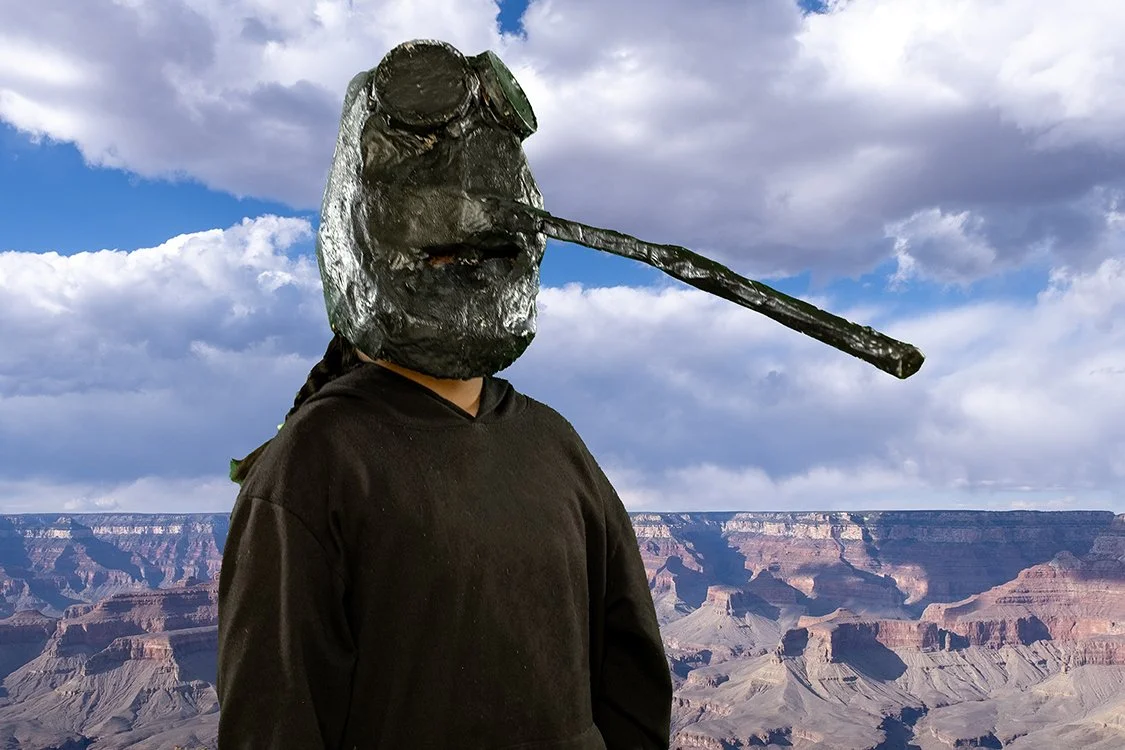
Ash Bird
My mask is a humming bird. The black is ash because that was the first thing that came to my mind as the future pollinator. The ash is from fire from war. Living in the Grand Canyon in Supai Camp, I see humming birds on a honeysuckle and it reminds me of my uncle who would give me a beaded humming bird. The Havasupai are guardians of the Grand Canyon.
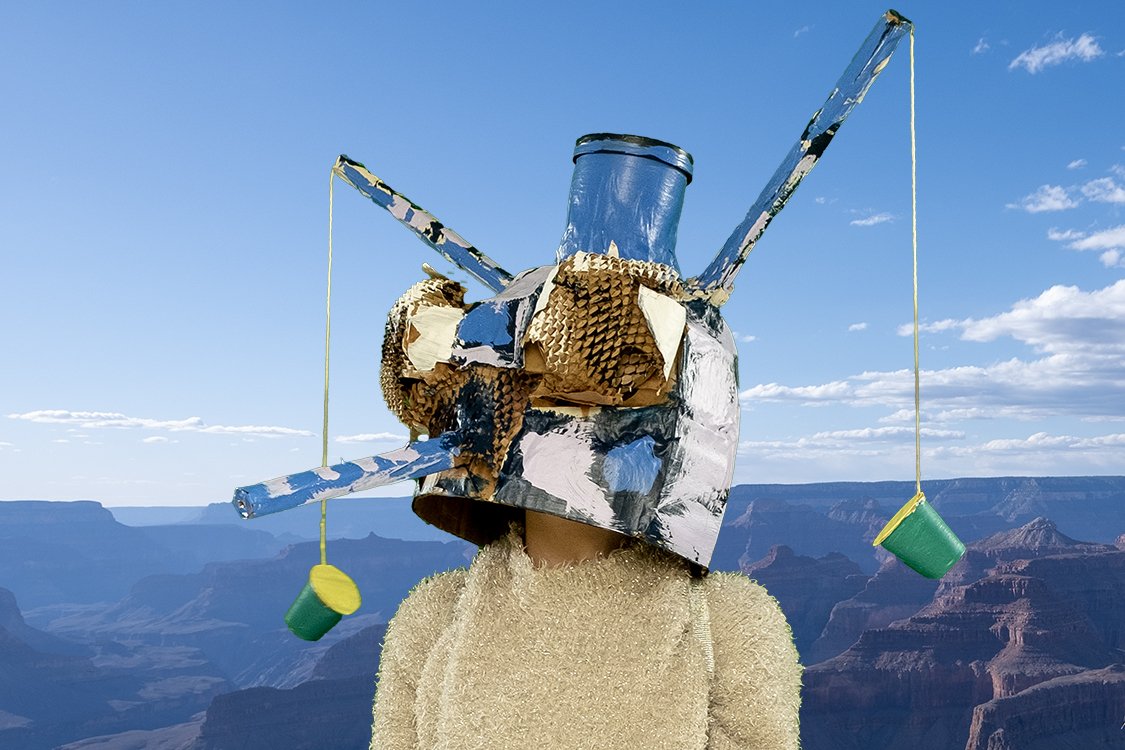
The Underwater Hummer
I love art. It inspires me to do more, and it also makes me feel happier. I chose the colors periwinkle, green, and light violet because they match the colors in the river.
My future pollinator is an underwater hummer. One of his features is that he has a cup on his head to hold more pollen, as he zips through the river and the sky. I gave him an adaptation to breathe underwater, because otherwise, he would not be able to live in what, to us humans, would be a harsh environment.
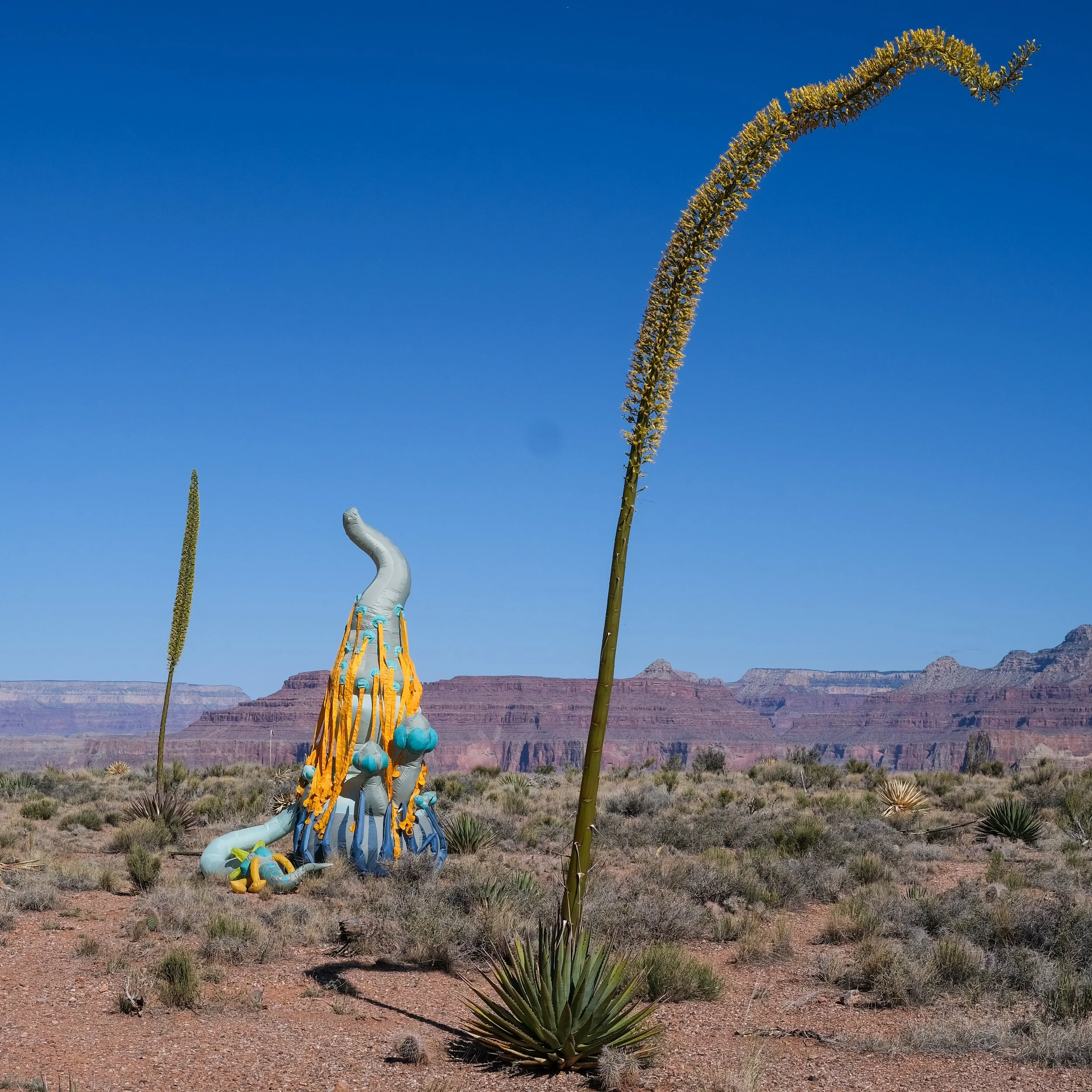
Our future plant adapted so that it could be pollinated by the future pollinators in our Pollination Parade which happened at the Grand Canyon visitor center, and at the Grand Canyon School.
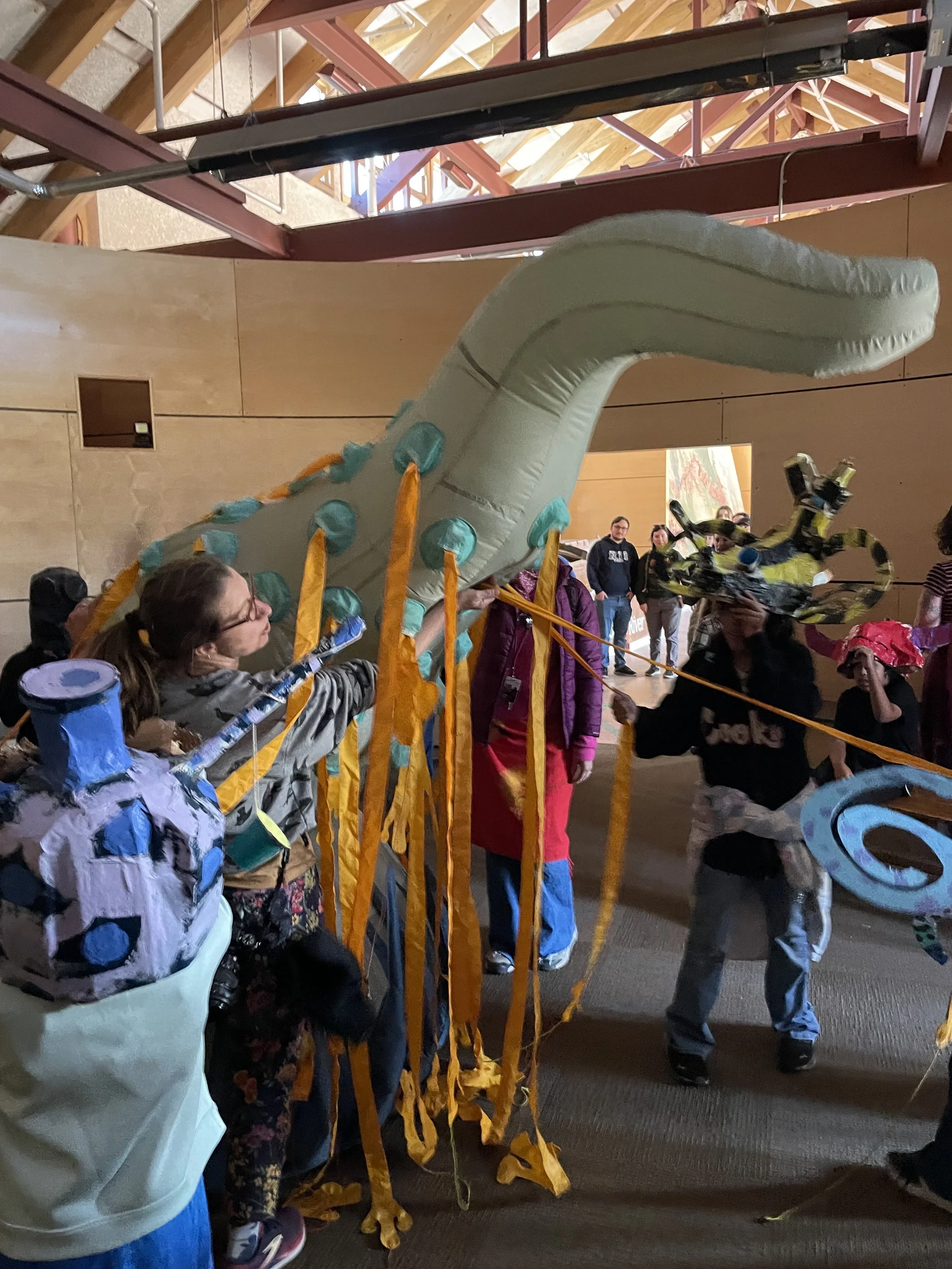
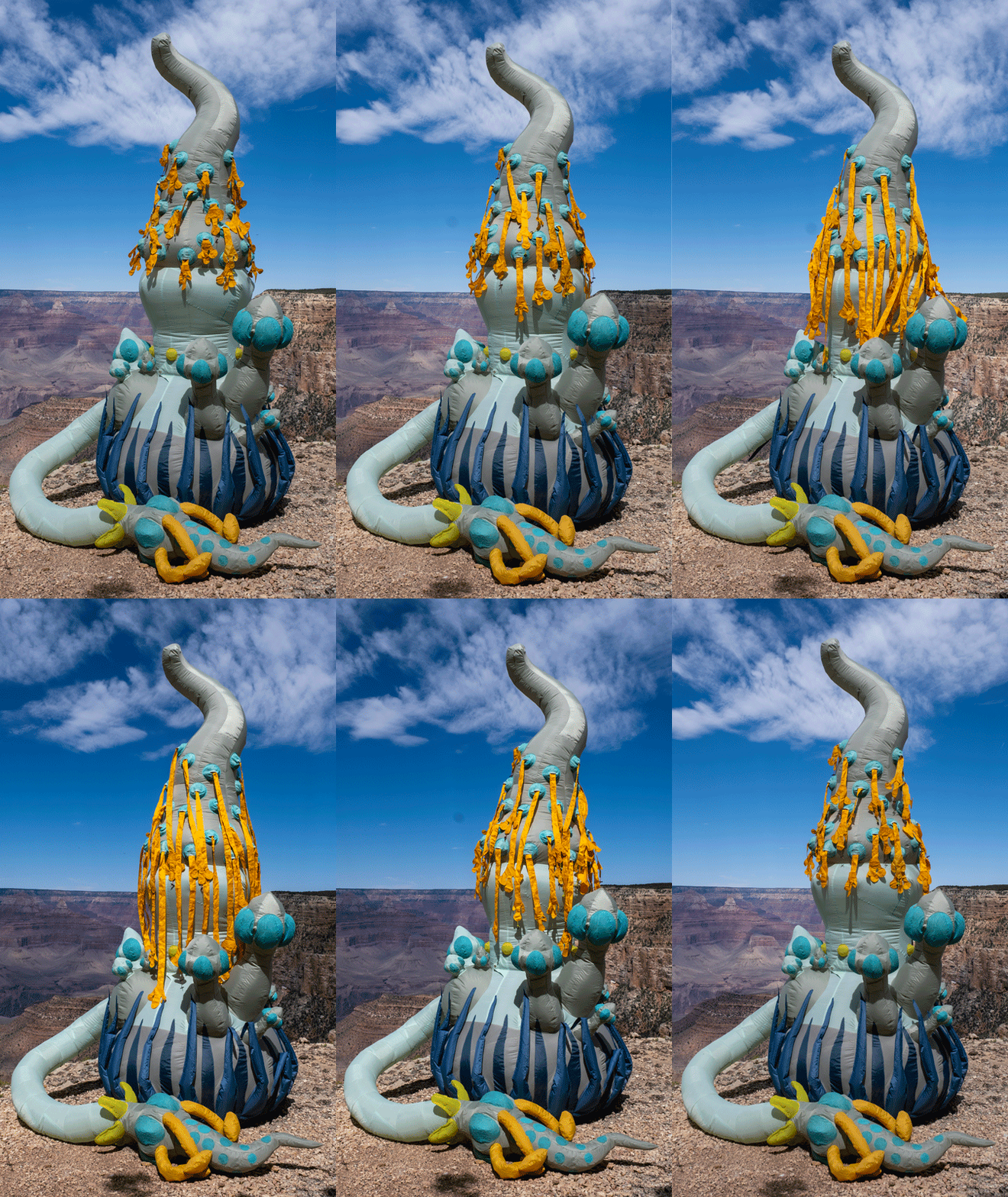
An Adapted Agave found throughout the Grand Canyon.